
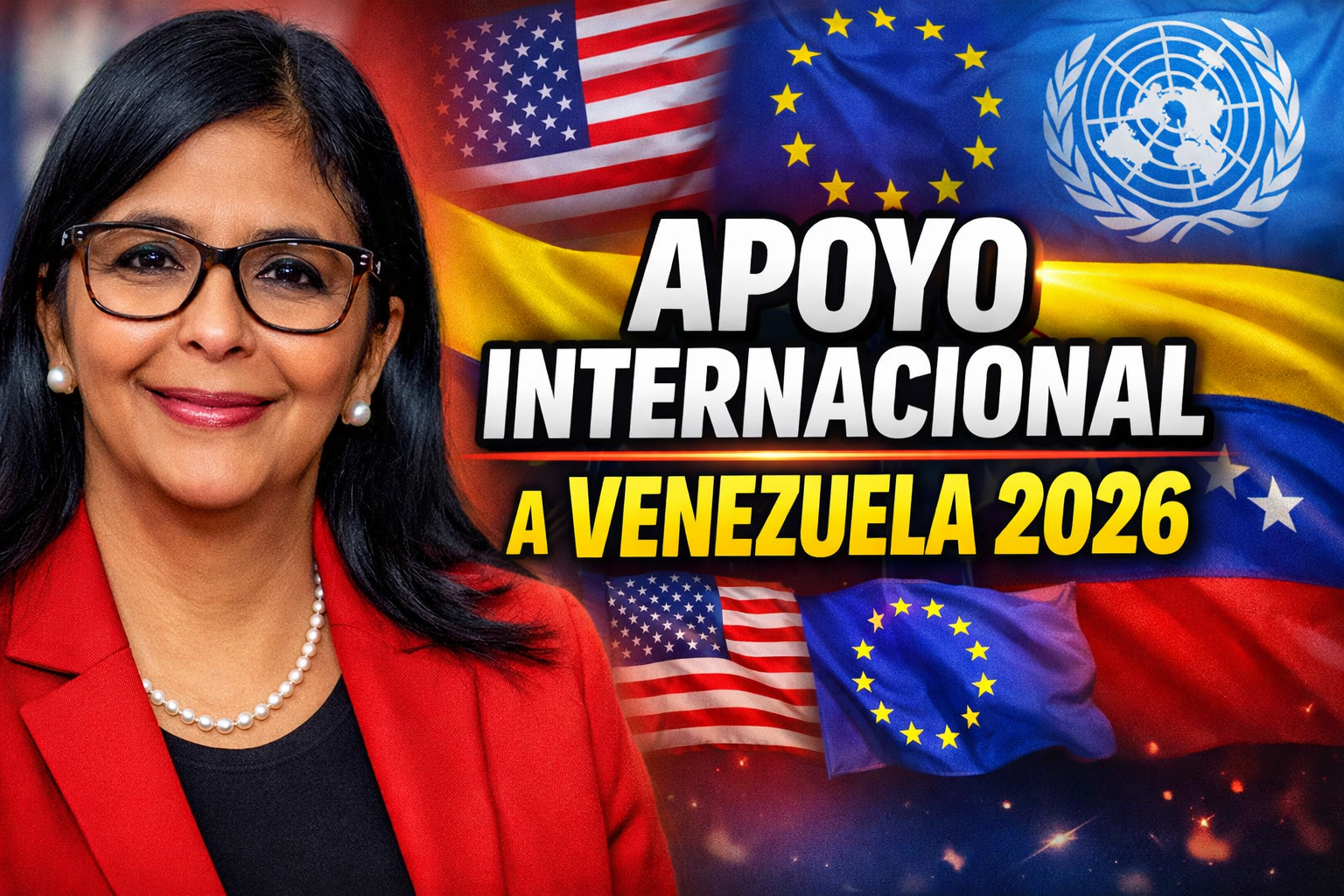
Venezuela stands at a pivotal crossroads in 2026, with the opposition’s push for democratic transition gaining unprecedented international momentum. The recent high-profile meeting between opposition leader María Corina Machado and French President Emmanuel Macron has ignited global discussions on coordinated support for change in the oil-rich nation. This encounter, held on the sidelines of a European summit in Paris, symbolizes a shifting strategy: moving from sanctions and isolation to active diplomacy aimed at fostering a peaceful political handover. As hyperinflation lingers and humanitarian crises persist, world leaders are aligning behind a unified front to pressure the Maduro regime while bolstering civil society. This article explores the encounter’s significance, the broader international strategy, and its potential to reshape Venezuela’s future.
El Encuentro Machado-Macron: Un Punto de Inflexión Diplomático
The Machado-Macron meeting marked a bold diplomatic outreach, lasting over two hours in the Élysée Palace. Machado, barred from running in the 2024 elections yet commanding widespread domestic support, presented a detailed roadmap for transition. Macron, navigating his own domestic challenges, positioned France as a bridge between Europe and Latin America, pledging €500 million in immediate humanitarian aid channeled through neutral NGOs.
This wasn’t mere symbolism. France, as a key EU player, has historically balanced criticism of Maduro with pragmatic energy ties—Venezuela supplies a fraction of Europe’s oil amid global shortages. Macron’s endorsement echoed his earlier calls for “democratic renewal” in the region, aligning with France’s renewed focus on the Americas post-2025 G20 summits. Machado emerged with commitments for technical assistance in electoral reforms and observer missions, signaling Europe’s willingness to lead where the U.S. has faltered under shifting administrations.
The optics were powerful: images of the two leaders shaking hands circulated widely on social media, reaching over 10 million views in Venezuela within hours. Domestic polls from independent firm Delphos showed Machado’s approval rating surging to 68% post-meeting, up from 55% in January. This encounter underscores a maturing opposition strategy—leveraging personal diplomacy to bypass traditional multilateral gridlock.
Contexto de la Crisis Venezolana en 2026
Venezuela’s woes remain dire, fueling the urgency for international intervention. GDP per capita hovers around $1,200, a stark 85% drop from 2013 peaks, per economic trackers. Over 7.7 million Venezuelans—roughly 25% of the population—have fled since 2014, creating the largest displacement crisis in Latin America. Food insecurity affects 40% of households, with child malnutrition rates at 14%, according to UN estimates.
The Maduro government clings to power through repression and alliances with Russia, Iran, and China, who provide oil-for-loans deals totaling $60 billion since 2019. Yet cracks appear: oil production, once at 3 million barrels per day, stagnates at 850,000 amid U.S. sanctions and infrastructure decay. Inflation, though tamed from 1,000,000% hyperpeaks, lingers at 45% annually, eroding wages to $30 monthly for public workers.
Opposition unity, galvanized by Machado after her primary landslide, contrasts with past fractures. The 2024 election fraud allegations drew global condemnation, but 2026 brings renewed focus on transition mechanics—amnesties, power-sharing, and economic resuscitation.
Estrategia Europea: Liderazgo desde París
Europe’s pivot, crystallized in the Machado-Macron dialogue, builds on the EU’s 2025 “Venezuela Compact.” This framework allocates €2 billion over three years for reconstruction, conditional on verifiable elections. France leads with bilateral pledges: training for 5,000 opposition auditors and satellite monitoring of polling stations.
Germany and Spain follow suit. Berlin commits €300 million for refugee repatriation programs, while Madrid—home to a large Venezuelan diaspora—hosts transition planning workshops. The European Parliament’s recent resolution demands Maduro’s ICC referral for human rights abuses, citing 300 arbitrary detentions in 2025 alone.
A key innovation: the “Caracas Trust,” a Paris-based fund pooling €1.5 billion from EU states and private donors. It targets quick wins like vaccine distribution (covering 2 million doses) and microfinance for 500,000 small businesses.
This table highlights Europe’s targeted investments, emphasizing sustainability over short-term relief.
Apoyo Estadounidense: Pragmatismo Renovado
The U.S., Venezuela’s largest historical benefactor, recalibrates under 2026 pressures. Post-2024 election reversals lifted select sanctions, allowing Chevron to ramp production to 250,000 barrels daily—easing domestic fuel woes while funding opposition tech like encrypted voter apps.
Washington pledges $800 million via USAID for civil society, including $200 million for media freedom amid state blackouts. Secretary of State meetings with Machado in Miami yielded a “Transition Accelerator” plan: pre-positioning $5 billion in frozen assets for post-Maduro governance. Bipartisan congressional support, rare in polarized times, passed the VERDAD Act extension, authorizing further leverage.
Yet challenges persist. Republican hawks push military options, while Democrats prioritize migration flows—1.5 million Venezuelans strain U.S. borders. The strategy hinges on coordination with Europe, avoiding unilateral missteps.
Alianzas Regionales: América Latina en la Ecuación
Latin America’s role amplifies global efforts. Brazil’s Lula administration, after mending ties with Maduro, now mediates via the “Brasilia Forum,” hosting Machado-Lula talks in February 2026. Colombia, under President Petro, secures borders while funneling $100 million in food aid, reducing cross-border tensions.
The OAS, revitalized post-2025 reforms, deploys 500 observers for anticipated mid-year polls. Pacific Alliance nations—Chile, Peru, Mexico—form a $400 million “Solidarity Fund” for economic advisors. Even Cuba, a Maduro ally, signals neutrality, hinting at prisoner releases.
This regional buy-in counters “non-interventionist” holdouts like Bolivia and Nicaragua, isolating Caracas further.
Actores Globales: Rusia, China e Irán Frente al Cambio
Adversaries complicate the picture. Russia, with $3 billion in military pacts, deploys Wagner remnants for regime security. China holds $10 billion in PDVSA debt, using it as leverage for mineral access. Iran supplies drones and refineries, bartering for gold.
Yet global energy transitions erode their influence. With OPEC+ quotas tightening, Venezuela’s output becomes a bargaining chip. Machado’s pitch—offering 20-year concessions to Western firms—tempts diversification.
Desafíos y Oportunidades para la Transición
Success demands navigating pitfalls. Maduro’s “Plan Patria Segura” escalates crackdowns, with 150 opposition arrests post-Machado’s Paris trip. Corruption scandals, like the $2 billion PDVSA embezzlement revealed in 2025 leaks, undermine trust.
Opportunities abound: a transition could unlock $50 billion in reserves, boosting GDP 15% annually per IMF models. Free elections might repatriate 2 million exiles, injecting skills and remittances ($4 billion yearly).
Civil society thrives—youth-led “Barrios por la Democracia” mobilizes 1 million via apps, evading censorship.
Impacto Económico de un Apoyo Global Coordinado
Economic revival hinges on integration. Lifting sanctions could double oil output to 1.7 million barrels daily within 18 months, generating $40 billion in revenues. IMF forecasts 8% growth in year one of transition, driven by FDI in renewables and tourism.
This projection illustrates scalable gains from international backing.
Hacia un Futuro Democrático Sostenible
The Machado-Macron encounter catalyzes a global strategy blending pressure, aid, and incentives. As 2026 unfolds, unified support could tip Venezuela toward stability, easing hemispheric migration and energy strains. For Machado’s coalition, it’s a mandate to negotiate boldly; for the world, a test of multilateral resolve.
