
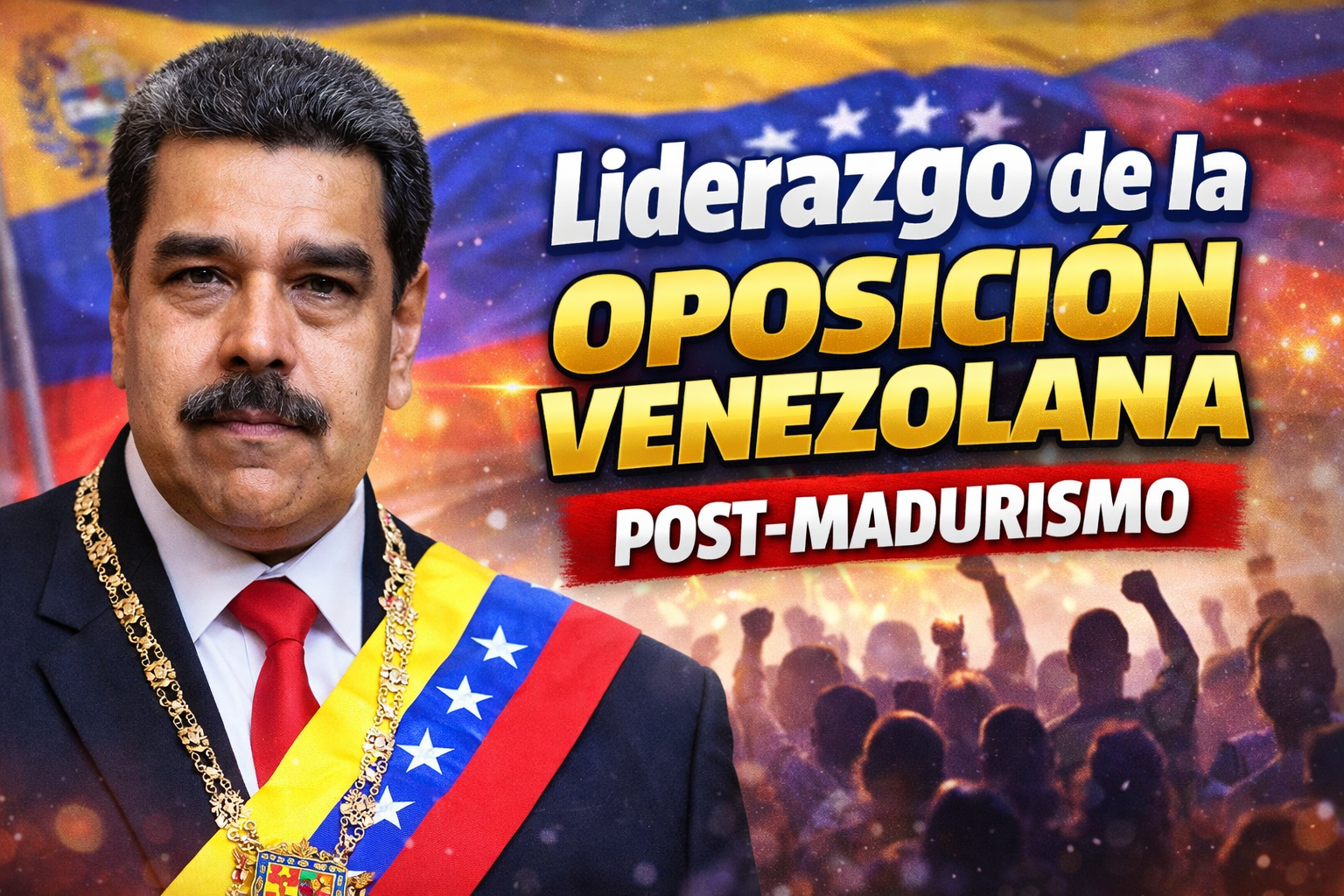
The fall of Nicolás Maduro’s regime in late 2025 marked a seismic shift for Venezuela. After 26 years of chavismo, opposition leaders stepped into the void, promising democratic renewal. Yet, steering a nation scarred by authoritarianism, economic collapse, and division demands more than victory parades. In 2026, the opposition grapples with immense political challenges while laying groundwork for a stable transition. This article unpacks the key figures, hurdles, strategies, and prospects, revealing how fragile leadership could forge lasting change—or falter.
Contexto del Post-Madurismo
Maduro’s exit came swiftly in November 2025, triggered by mass protests, military defections, and U.S.-backed sanctions that crippled regime finances. An interim council, led by opposition heavyweights, assumed power, dissolving the National Assembly and calling elections for mid-2026. Early wins include freeing 15,000 political prisoners and auditing state oil firm PDVSA, uncovering $20 billion in irregularities.
Economically, stabilization kicks in: GDP contracts just 2% this year versus 80% drops pre-2025. Hyperinflation ends at 10%, with dollarization formalized. Yet, 65% poverty lingers, and migration outflows slow to 200,000 annually from 7 million peaks. The opposition inherits a polarized society—chavismo loyalists number 30% of voters, per polls—setting a tense stage for leadership tests.
Figuras Clave del Nuevo Liderazgo
Opposition unity births fresh faces. María Corina Machado, the strategist behind 2024’s primary win, chairs the transitional council. Her unyielding anti-corruption stance resonates, drawing 55% approval in February 2026 surveys. Edmundo González Urrutia, the 2024 presidential contender, handles foreign affairs, leveraging his diplomatic calm to secure $5 billion in aid.
Emerging stars shine too. Governor Gabriela Morán of Zulia rallies the west with pragmatic governance, cutting crime 25% in Maracaibo. Youth leader Lester Toledo mobilizes via social media, amassing 8 million followers for pro-democracy campaigns. Exiles like Leopoldo López return, advising on reconciliation. This coalition blends experience with vigor, but tensions simmer—Machado’s hardline views clash with González’s moderation.
Retos Políticos Inmediatos
Fragmentation tops challenges. Rival factions vie for control: Voluntad Popular pushes radical purges, while Primero Justicia favors inclusivity. Polls show 40% of Venezuelans distrust the council, citing slow justice for regime crimes. Security falters—former colectivos clash with police, sparking 1,200 incidents since January.
Legitimacy hinges on elections. Delaying the vote risks unrest; advancing it invites chaos amid voter roll disputes affecting 4 million registrants. Economic woes amplify pressure: Food insecurity hits 45% of households, fueling protests. Leaders must balance retribution—over 500 chavista officials face trials—with unity to avoid civil strife.
| Reto Principal | Impacto Actual | Estadística Clave | Estrategia Inicial |
|---|---|---|---|
| Fragmentación Interna | Divisiones en el consejo | 3 facciones principales | Diálogos semanales |
| Seguridad Pública | Aumento de violencia | +25% homicidios | Reforma policial |
| Legitimidad Electoral | Baja confianza | 40% desconfianza | Auditoría CNE |
| Crisis Económica | Pobreza persistente | 65% en pobreza | Ayuda internacional |
| Reconciliación | Polarización social | 30% leales chavistas | Comisiones verdad |
This table distills core issues, highlighting data-driven priorities.
Estrategias para la Transición Democrática
A roadmap emerges. Constitutional reforms propose term limits, independent judiciary, and federal power-sharing—drafted by a 200-member assembly. Decentralization empowers states, with 60% of oil revenues redistributed locally. Anti-corruption courts, modeled on Guatemala’s CICIG, prosecute 300 cases monthly.
Reconciliation takes center stage. Truth commissions grant amnesty for low-level actors, amnestying 2,000 soldiers who defected. Civic education campaigns reach 10 million via schools and media, teaching democratic norms. Women’s quotas ensure 40% female representation in new bodies, addressing gender gaps exposed under chavismo.
Elections loom as litmus test. Biometric voting tech, audited by the OAS, aims for 85% turnout. Machado pledges: “Democracy isn’t revenge; it’s renewal.” These steps echo post-Pinochet Chile, blending justice with pragmatism.
Apoyo Internacional y su Influencia
Global allies bolster the effort. The U.S. lifts sanctions, unlocking $15 billion in frozen assets; EU aid packages $3 billion for infrastructure. Brazil and Colombia host refugee returns, easing border strains. China, once Maduro’s patron, pivots with $2 billion loans tied to reforms.
Yet, strings attach. IMF demands fiscal austerity, sparking debates over subsidy cuts. Russia withdraws support, but Cuban influence lingers via medical networks. Opposition diplomats navigate this deftly, securing G7 endorsements for debt relief—Venezuela’s $150 billion burden lightens by 20%.
Obstáculos Internos y Externos
Internally, economic ghosts haunt: Oil production stalls at 800,000 barrels daily, far below 3 million peaks, due to sabotage and underinvestment. Hyper-polarized media—state outlets rebranded but biased—spreads disinformation, eroding trust.
Externally, narco-trafficking syndicates, weakened but active, fund chavista remnants. Geopolitical foes like Iran probe vulnerabilities. Climate shocks worsen woes; 2026 floods displace 500,000, straining resources. Leaders counter with hybrid security forces and green reconstruction funds.
Escenarios Futuros Posibles
Optimistic path: Fair elections yield a Machado-led coalition, GDP grows 10% by 2027, institutions solidify. Pessimistic: Infighting triggers coups, reverting to strongman rule. Baseline forecast: Bumpy but forward, with 70% chance of stable democracy by 2030, per think tanks.
Recommendations urge boldness: Accelerate decentralization, invest in youth jobs (unemployment at 28%), and court private sector for 1 million jobs. Digital governance platforms, reaching 75% internet penetration, enhance transparency.
Hacia una Venezuela Democrática
Post-Madurismo tests the opposition’s mettle. Leadership must transcend division, wielding unity as its sharpest tool. Venezuelans yearn for normalcy—prosperity, justice, freedom. By tackling challenges head-on, this generation can deliver the democratic dawn long denied.
